Road safety is one of the main challenges facing companies that manage vehicle fleets. Long hours behind the wheel, the monotony of the journeys and a lack of rest can affect drivers’ concentration and increase the risk of an accident.
Given this reality, smart cameras for lorries have become a technological tool that helps to identify risky situations whilst driving, such as fatigue, drowsiness or distractions.
But how do they work, and what benefits do they offer transport companies?
What are smart cameras for lorries?
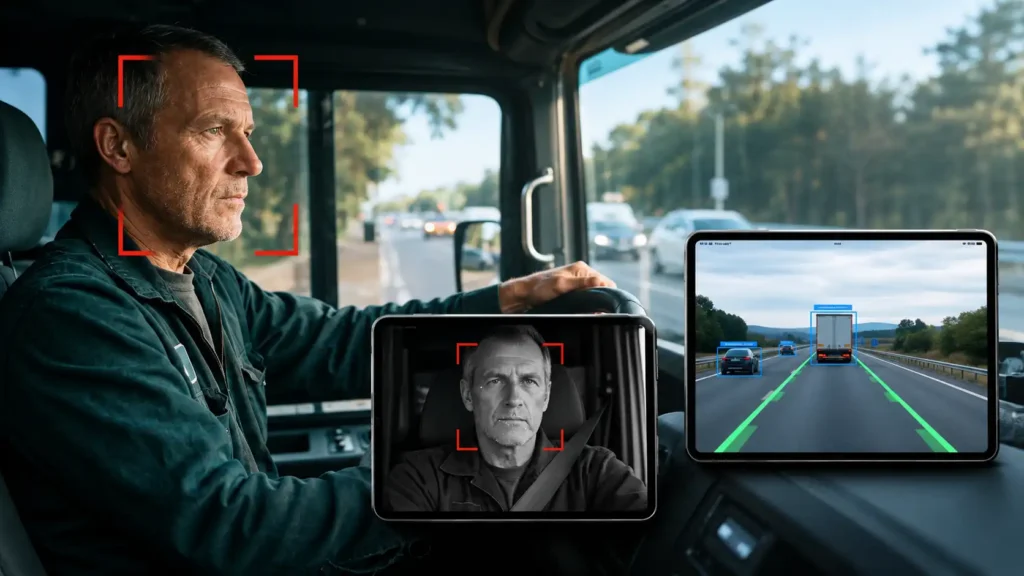
Unlike traditional cameras, which are mainly limite to recording images, smart cameras incorporate technology capable of analysing certain behaviours whilst driving.
Through driver monitoring systems, they can
identify signs associated with tiredness or inattention, such as:
- Prolonged closing of the eyes.
- Frequent yawning.
- Head movements associated with drowsiness.
- Distractions or shifts in gaze.
When they detect a risky situation, they can trigger audible or visual alerts to warn the driver and help them refocus their attention.
5 benefits of fitting smart cameras to a fleet
Fitting cameras to detect fatigue and drowsiness opens up new possibilities for improving safety and transport management.
1. Detecting high-risk situations. They enable the identification of signs of fatigue, drowsiness and distraction whilst driving, facilitating earlier intervention.
2. Improving road safety. Immediate alerts help to warn the driver of certain behaviours that may jeopardise their safety and that of other road users.
3. Monitor incidents. The data generated enables fleet managers to review events and identify potential risk patterns.
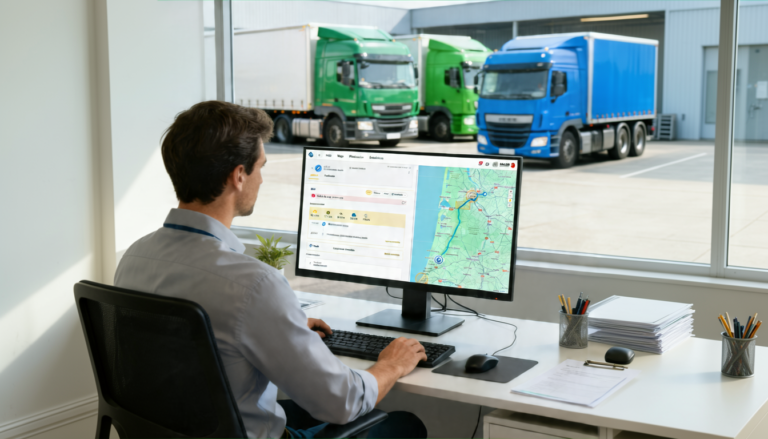
4. Find out more about driving. Integrating the cameras with a fleet management platform allows you to centralise information on vehicles and specific events that occur during journeys.
5. To promote safer driving. The data collected helps to identify areas for improvement and to strengthen preventative measures within the company.
Smart cameras and fleet management: a more comprehensive view.
The digitalisation of transport enables different technologies to be linked together to improve vehicle monitoring and the information available on each operation.
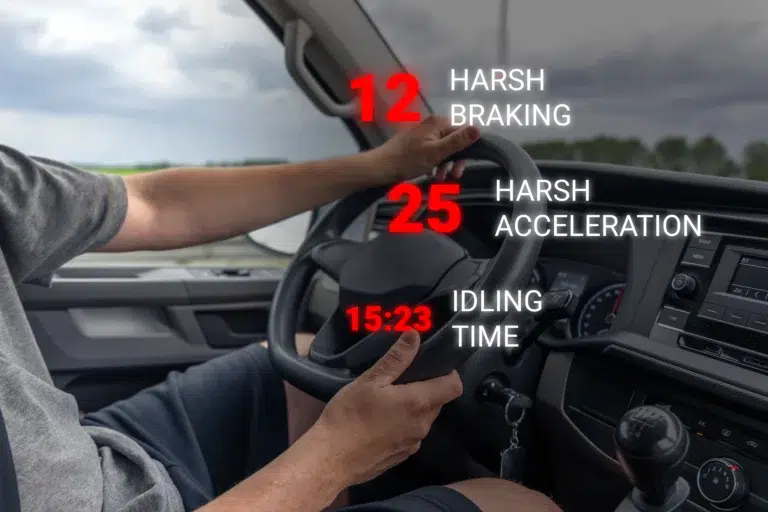
Whilst GPS systems enable the tracking of trucks’ locations and routes, smart cameras provide information on specific driving behaviours.
The combination of these two technologies offers transport managers more tools to monitor their fleet, identify incidents and make informed decisions.
Technology as an ally for safety in transport
Preventing road risks requires training, awareness and tools to help identify potentially dangerous situations.
Smart cameras for lorries represent a breakthrough in this field, as they can detect signs of fatigue and drowsiness and trigger alerts whilst driving.
At Fagor Electrónica – Smart Data Services, we are working to make these technologies more accessible to transport companies through fleet monitoring and management solutions that provide more information about vehicles and their activity.
Would you like to find out how to integrate smart cameras into your fleet? Get in touch with our team and discover our technology solutions for the transport sector.